Disclosure: This article may contain affiliate links. We may earn a commission at no additional cost to you.
Table of Contents
ToggleWhich is The Best HyperX Headsets In 2026?
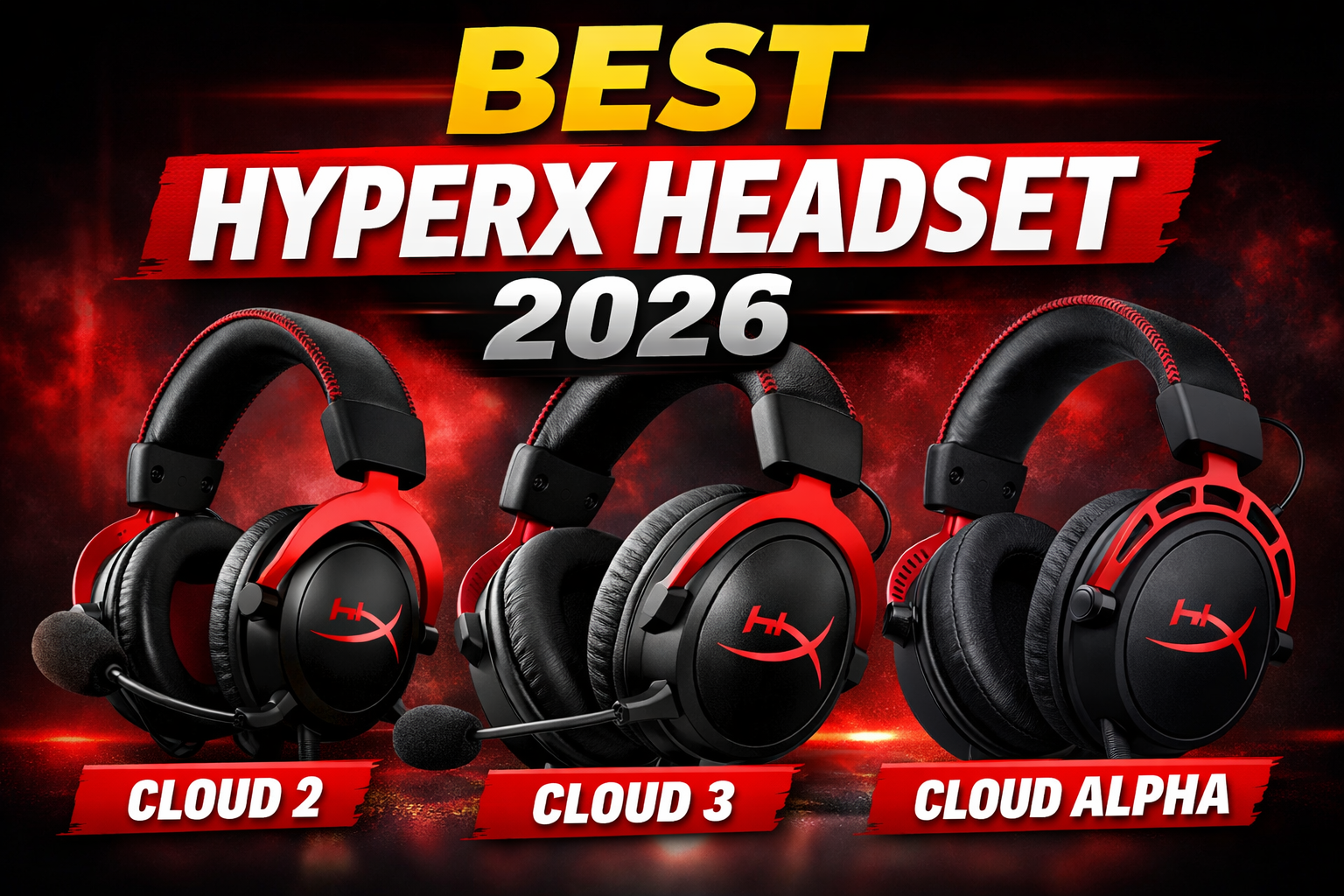
HyperX headsets are a common choice for gamers who need dependable comfort, reliable microphones, and sound profiles that work for both competitive play and media. This guide compares the current HyperX wired and top wireless models — Cloud 2, Cloud 3, Cloud Alpha, and Cloud Alpha Wireless — with clear recommendations based on sound signature, mic performance, comfort, and platform compatibility. The analysis is grounded in manufacturer specs and independent lab reviews so you can make a confident purchase.
Quick comparison
| Model | Drivers | Mic | Connectivity | Key strength | Best for | Typical price band |
|---|---|---|---|---|---|---|
| HyperX Cloud 2 | 53 mm | Detachable boom | 3.5 mm + USB adapter | Comfortable, predictable | Budget competitive & console | ~$70–$100. |
| HyperX Cloud 3 | 53 mm (tuned) | Improved mic | 3.5 mm + USB (spatial) | Cleaner mids, better mic | Competitive players wanting modern mic | ~$100–$130. |
| HyperX Cloud Alpha | 50 mm (dual-chamber) | Detachable boom | 3.5 mm | Lower distortion, better separation | Mixed competitive & immersive gaming | ~$90–$120. |
| Cloud Alpha Wireless | 50 mm, dual-chamber | Detachable boom | 2.4 GHz wireless (dongle) | Exceptional battery life (real-world tests) | Streamers, marathon wireless use | ~$150–$220. |
| Cloud Stinger 2 | Budget drivers | Boom mic (varies) | 3.5 mm | Very light, low cost | Casual gamers, small heads | ~$30–$80. |
Model breakdowns
HyperX Cloud 2 — Proven wired baseline
The Cloud 2 remains a sensible wired pick: 53 mm drivers, an aluminum frame, and memory-foam ear cushions provide comfort and consistent performance across platforms. USB adapter offers virtual 7.1 on PC while 3.5 mm provides console compatibility. It’s not the absolute top-tier for esports audio imaging, but it’s consistent and affordable — a reliable daily driver.
Who it’s for: players who want low-latency wired performance and maximum compatibility with minimal setup.
HyperX Cloud 3 — the modernized Cloud with a better mic
Cloud 3 updates the Cloud formula with cleaner midrange, reduced low-frequency muddiness, and a notably improved microphone design. Ergonomics are refined (softer headband padding, better clamp balance), which helps during long sessions. If microphone clarity and comfort are top priorities, Cloud 3 frequently outperforms Cloud 2 in real-world comparisons.
Who it’s for: competitive players who also value clearer voice comms.
HyperX Cloud Alpha — cleaner separation via dual-chamber drivers
Cloud Alpha uses HyperX’s dual-chamber design to isolate bass from mids, which reduces harmonic distortion and improves instrument separation. That translates to clearer footsteps and less “muddiness” while still delivering satisfying low-end impact for immersive titles. It’s a strong all-rounder for mixed gaming and media.
Who it’s for: players who want improved audio separation without spending too much.
HyperX Cloud Alpha Wireless — marathon wireless with serious battery life
The Alpha Wireless keeps the Alpha tuning and places it on a low-latency 2.4 GHz link. Its headline feature is battery longevity — both HyperX claims and independent reviewers report exceptionally long runtimes compared with most wireless gaming headsets. That endurance and stable wireless link make it attractive for streamers and users who dislike frequent charging. Note: wireless introduces firmware/dongle variables; test compatibility with your console or PC setup.
Who it’s for: streamers and heavy users who want wireless freedom and minimal charging.
HyperX Cloud Stinger 2 — ultra-light budget option
Stinger 2 targets value and comfort for smaller heads. It delivers decent mic performance for chat and reduced clamp force, making it a practical option for students, casuals, or anyone looking for a lightweight spare headset. Expect compromises in imaging and driver refinement compared with Alpha/Cloud series.
Who it’s for: budget buyers and casual console players who prioritize comfort over raw audio precision.
Head-to-head: critical differences
Clarity & separation: Cloud Alpha > Cloud 3 > Cloud 2 (Alpha’s dual-chamber design reduces distortion).
Microphone quality: Cloud 3 > Cloud Alpha ≈ Cloud 2. Cloud 3’s mic design is the clearest of the wired lineup.
Wireless & battery: Alpha Wireless stands out for battery life; wired Alpha or Cloud 3 preferred where absolute latency consistency is required.
Comfort: All HyperX Clouds prioritize memory-foam comfort; Cloud 3 refines padding and balance slightly.
Buyer’s checklist — what to prioritize before you click
Primary use: Competitive FPS → prioritize separation & stereo accuracy (Alpha / Cloud 3 in stereo). Streaming/marathon → consider Alpha Wireless for battery. Casual/console → Cloud 2 or Stinger 2.
Wired vs wireless: Wired guarantees lower latency and simpler setup; modern 2.4 GHz wireless is close to wired for many setups but test your platform.
Mic needs: If you depend on clear team comms, Cloud 3’s mic is the best out-of-box option among these. Serious streamers should still consider a standalone USB/XLR mic.
Budget & deals: Watch sale events — Cloud 2 often dips heavily on promotions; the right discount can change the best value pick.
FAQ
Which HyperX headset is best for competitive FPS?
Cloud Alpha and Cloud 3 are best for competitive play because they deliver clearer separation and lower distortion than older Cloud models; use stereo mode for most competitive players.
Is the Alpha Wireless battery life really exceptional?
Yes — multiple independent reviews and long-term tests highlight significantly longer runtimes than typical wireless headsets, though real-world life depends on volume and feature use.
Do HyperX headsets work with PS5 and Xbox?
Wired 3.5 mm models work broadly across modern consoles. Wireless support varies by dongle and model — always check the product page for console compatibility before purchase.
Should I use virtual surround or stereo?
For competitive accuracy, stereo is generally preferred. Virtual surround or DTS modes improve immersion in single-player games but can slightly alter positional cues.
Headsets Links
If you’re looking for more options under a tighter budget, check out our guide to the best gaming headsets under $100.Top 5 Best Gaming Headsets Under $100 (2026 Buyer Guide) – GameZHaven