Disclosure: This article may contain affiliate links. We may earn a commission at no additional cost to you.
Table of Contents
ToggleLogitech Mouse vs Razer Mouse: Which is better in 2026?
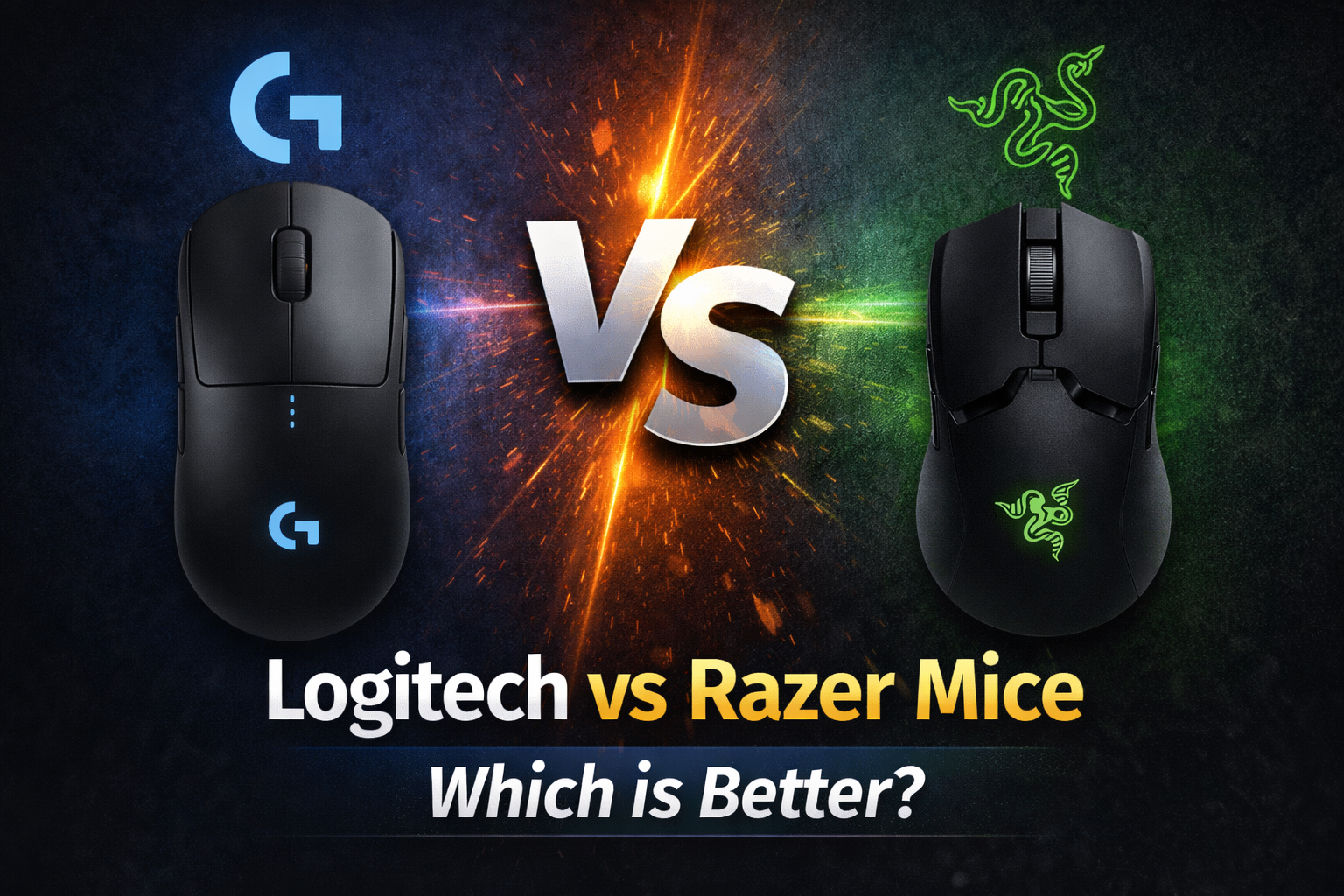
If you’re shopping for a gaming mouse in 2026, you’re probably deciding between two names: Logitech and Razer. These Swiss and American giants dominate the market, but they take completely different approaches to design, performance, and features. Logitech focuses on lightweight innovation with their HERO sensors and LIGHTSPEED wireless, while Razer pushes extreme polling rates and optical switches . This guide breaks down exactly how they compare across every price point so you can choose the right brand for your hand size, game style, and budget.
Quick Comparison: Logitech vs Razer at a Glance
| Category | Logitech Winner | Razer Winner | Why |
|---|---|---|---|
| Budget Wireless | G304X “秒鲨” (~$45) | Viper V3 HyperSpeed (~$70) | Logitech wins on price-to-performance |
| Mid-Range Wireless | G305 (~$55) | DeathAdder V3 HyperSpeed (~$100) | Razer offers more features at higher price |
| Premium Wireless | GPW4 小狗版 (~$120) | Viper V3 Pro (~$150) | Logitech lighter; Razer higher polling |
| Ultra-Premium Flagship | GPW5 雪豹 (~$160) | DeathAdder V4 Pro (~$160) | Logitech has HITS tech; Razer has 45K sensor |
| Ergonomic | GPW4 鹰眼版 (~$130) | DeathAdder V3 (~$70-100) | Razer offers budget ergo; Logitech premium only |
| Productivity | MX Master 4 (~$120) | Pro Click V2 (~$100) | Logitech dominates office mice |
Brand Philosophy: Two Different Religions
Logitech G: The Swiss Precision Engineers
Founded in 1981 in Switzerland, Logitech approaches gaming mice like precision instruments . Their philosophy is simple: perfect the core technologies, then make everything lighter.
Logitech’s key innovations:
-
HERO sensors: Industry-leading power efficiency without sacrificing accuracy
-
LIGHTSPEED wireless: The technology that proved wireless could beat wired
-
HITS (Haptic Inductive Trigger System): Their newest breakthrough, using electromagnetic induction for faster clicks
The GPW (G Pro Wireless) series has become the most-used mouse among esports pros because Logitech prioritizes what actually matters in competition: consistent performance, zero compromises .
Razer: The American Innovator
Razer takes a different approach: throw specs at the wall and refine later. Their mice often feature the highest numbers on paper—highest DPI, highest polling rates, most buttons.
Razer’s key innovations:
-
Optical switches: Eliminate double-click issues entirely by using light instead of metal contacts
-
Focus Pro sensors: Their latest 30K-45K DPI sensors with intelligent tracking
-
HyperPolling: 4000Hz and 8000Hz polling rates for 0.125ms response times
Razer tends to release more experimental products and frequently updates designs based on feedback.
Head-to-Head: Every Price Tier Compared
Budget Tier (Under $70)
Logitech G304X “秒鲨” (~$45)
This is Logitech’s 2026 update to the legendary G304. The biggest change? A built-in 290mAh lithium battery replaces the old AA, dropping weight to just 57g. It features:
-
HERO 25K sensor (up to 25,600 DPI)
-
106-hour battery life
-
LIGHTSPEED wireless + Bluetooth dual mode
-
1000Hz polling (1ms response)
-
Designed for small-medium hands (17-19cm)
Who it’s for: Budget-conscious gamers, students, and anyone who wants LIGHTSPEED performance without the premium price. The built-in battery makes it significantly lighter than previous budget Logitech options .
Razer Viper V3 HyperSpeed (~$70)
Razer’s budget offering sits at a higher price point but delivers impressive battery life:
-
Focus Pro 30K optical sensor
-
280-hour battery life (absolutely massive)
-
Compact, lightweight design
-
1000Hz standard (4000Hz optional with separate dongle)
Who it’s for: Gamers who prioritize battery life above all else. The Viper V3 HyperSpeed can last through months of casual gaming before needing a charge .
Verdict: Logitech wins this tier. You get 90% of the performance for significantly less money, with better weight and dual-mode connectivity.
Mid-Range Wireless ($70-$120)
Logitech G305 (~$55)
The G305 remains a reliable workhorse, though it’s older tech:
-
HERO sensor (12,000 DPI)
-
250-hour battery life (AA battery)
-
99g weight (heavier than modern options)
Razer DeathAdder V3 HyperSpeed (~$100)
This is where Razer starts to shine:
-
Focus X 26K optical sensor
-
Lightweight design (under 60g)
-
Excellent ergonomics for palm grip
-
Under $100 price point makes it exceptional value
Who it’s for: Gamers who want premium ergonomics without spending $150. The DeathAdder shape is legendary for a reason .
Verdict: Razer wins this tier. The DeathAdder V3 HyperSpeed offers better ergonomics and newer tech at a competitive price.
Premium Wireless ($120-$150)
Logitech GPW4 小狗版 (PRO X SUPERLIGHT 2C) (~$120-140)
The “Puppy Edition” is Logitech’s first compact version of their legendary SUPERLIGHT series:
-
Weight: 51g (extremely light)
-
Sensor: HERO 2 (44,000 DPI, 888 IPS, 88G acceleration)
-
Polling: 8KHz native support (0.125ms delay)
-
Size: Compact for hands under 17cm
-
Battery: ~95 hours at 1KHz
Who it’s for: Small-handed competitive players, especially those who play FPS games. The 51g weight makes flick shots feel effortless .
Razer Viper V3 Pro (~$150)
Razer’s top-tier symmetrical offering:
-
Weight: 54g
-
Sensor: Focus Pro 35K
-
Polling: Up to 8KHz
-
Battery: 95 hours at 1KHz, 17 hours at 8KHz
-
Test score: 1.17 (PC Games Hardware)
Who it’s for: Competitive FPS players who want the absolute fastest response times. The Viper V3 Pro is built for esports .
Verdict: Tie. Logitech wins on weight (51g vs 54g), while Razer offers slightly higher DPI. Choose based on hand size—GPW4小狗 for small hands, Viper V3 Pro for medium.
Ultra-Premium Flagship ($150+)
Logitech GPW5 雪豹 (PRO X2 SUPERSTRIKE) (~$160)
Logitech’s 2026 flagship introduces game-changing technology:
-
HITS (Haptic Inductive Trigger System): Electromagnetic switches that are 30ms faster than traditional mechanical switches
-
HERO 2 sensor (44,000 DPI)
-
Weight: 61g
-
Native 8KHz polling
-
Customizable click feel via software
The HITS system is revolutionary—it uses electromagnetic induction instead of physical contact, eliminating mechanical wear and enabling software-adjustable actuation points .
Who it’s for: Professional players and enthusiasts who want the absolute latest technology. The 30ms advantage (yes, milliseconds) could genuinely matter in competitive play.
Razer DeathAdder V4 Pro (~$160)
Razer’s current flagship:
-
Sensor: 45,000 DPI (highest available)
-
Weight: 65g
-
Polling: 8KHz native
-
Battery: 150 hours at 1KHz
-
Optical scroll wheel
Who it’s for: Gamers who want the highest specs on paper and prefer ergonomic shapes .
Verdict: Logitech wins on innovation. The HITS technology is a genuine breakthrough, while Razer’s offering is an evolution rather than revolution .
Ergonomic Options
Logitech GPW4 鹰眼版 (PRO X SUPERLIGHT 2 DEX) (~$130-150)
Logitech’s first right-handed ergonomic SUPERLIGHT:
-
Weight: Under 60g
-
Right-handed design, non-symmetrical
-
HERO 2 sensor
-
8KHz polling
-
Designed for “鹰眼” (sniper/架点) players who need stability
Who it’s for: Right-handed players who prefer ergonomic shapes but don’t want to sacrifice weight. This fills a huge gap in Logitech’s lineup .
Razer DeathAdder V3 (Wired) (~$70)
The classic ergonomic choice:
-
Weight: 82g (wired version)
-
Focus Pro 30K sensor
-
Legendary DeathAdder shape
-
Much more affordable
Who it’s for: Palm grippers on a budget. The wired version delivers premium ergonomics at a fraction of the cost.
Verdict: Razer wins on value. The DeathAdder V3 wired is half the price and still excellent. Logitech wins if you must have wireless and under 60g.
Productivity & Hybrid Mice
Logitech MX Master 4 (~$120)
The undisputed king of productivity mice:
-
8K DPI sensor
-
MagSpeed electromagnetic scroll wheel
-
Haptic Sense Panel: Rubber thumb rest with haptic feedback
-
Actions Ring: On-screen menu with 8 customizable commands
-
USB-C receiver (finally!)
-
70-day battery life
-
Works on glass
The Actions Ring is genuinely useful—one tap opens a circle of commands for volume, apps, websites, or Adobe/Zoom shortcuts .
Who it’s for: Anyone who spends 8+ hours at a computer. It’s the best mouse for work, period .
Razer Pro Click V2 (~$100)
Razer’s productivity offering:
-
Focus Pro 30K sensor
-
AI Prompt Master integration (ChatGPT, Copilot shortcuts)
-
9 programmable buttons
-
3-mode connectivity
-
More gaming-oriented design
Who it’s for: Users who want a mouse for both work and occasional gaming, especially if they use AI tools regularly .
Verdict: Logitech dominates. The MX Master 4 is in a class of its own for productivity .
Technology Deep Dive
Sensors: HERO 2 vs Focus Pro
Logitech HERO 2
-
DPI range: 100-44,000
-
IPS tracking: 888
-
Acceleration: 88G
-
Key advantage: Power efficiency (95+ hours at 1KHz)
Razer Focus Pro
-
DPI range: Up to 45,000 (V4 Pro)
-
Motion sync technology
-
Intelligent tracking on glass
-
Key advantage: Higher max DPI on premium models
Winner: Tie. Both sensors are flawless—you won’t miss shots because of either.
Wireless Technology
Logitech LIGHTSPEED
-
Proven in esports for years
-
0.125ms at 8KHz
-
Excellent interference rejection
-
POWERPLAY wireless charging compatible
Razer HyperSpeed
-
Also 0.125ms at 8KHz
-
Slightly newer implementation
-
Good battery optimization
Winner: Logitech (slightly) due to longer track record and POWERPLAY ecosystem.
Switches
Logitech LIGHTFORCE / HITS
-
Optical-mechanical hybrid on standard models
-
HITS: Electromagnetic induction on GPW5
-
No double-click issues
-
Software-adjustable feel on HITS
Razer Optical Switches
-
Gen-3 optical switches
-
Light-based actuation
-
90 million click rating
-
Instant response, no debounce delay
Winner: Logitech’s HITS is revolutionary, but Razer’s optical switches are proven and excellent .
Buyer’s Guide: How to Choose
Choose Logitech If:
-
You want the lightest possible mouse – The GPW4小狗 at 51g is lighter than any Razer offering
-
You’re on a strict budget – The G304X at ~$45 offers flagship sensor performance
-
You need a productivity mouse – MX Master 4 has no equal
-
You want the latest innovation – HITS technology on GPW5 is genuinely new
-
You have small hands – GPW4小狗 is specifically designed for you
Choose Razer If:
-
You want the highest specs on paper – 45K DPI on DeathAdder V4 Pro
-
You prefer ergonomic shapes on a budget – DeathAdder V3 wired at ~$70
-
You want optical switches – Proven reliability, zero double-click issues
-
You need massive battery life – Viper V3 HyperSpeed at 280 hours
-
You use AI tools – Pro Click V2’s AI integration is genuinely useful
The Pro Player Perspective
In 2026, Logitech dominates pro usage—especially the GPW series. The GPW4小狗 and GPW5雪豹 are everywhere in tournaments .
Why pros choose Logitech:
-
Consistency: HERO sensors behave identically across all units
-
Weight: Sub-60g mice reduce fatigue during 10+ hour practice days
-
LIGHTSPEED trust: Years of proven wireless reliability
Razer is more common among content creators and streamers who appreciate the higher specs and RGB options.
Frequently Asked Questions
Which brand makes better budget mice?
Logitech wins this category easily. The G304X at ~$45 offers HERO 25K sensor and 57g weight—specs that rival mice costing three times as much . Razer’s budget options start around $70.
Are Razer optical switches really better?
“Better” depends on priorities. Optical switches cannot develop double-click issues, which is their biggest advantage. Logitech’s mechanical switches feel more tactile to some users, while their new HITS system offers the best of both worlds .
Which brand has better software?
Logitech’s G Hub is simpler and lighter. Razer Synapse offers more features but feels bloated. For productivity, Logitech Options+ is excellent—especially with the MX Master 4’s Actions Ring .
Do I need 8KHz polling?
Only if you have a 240Hz+ monitor and play competitively. Most players won’t notice the difference from 1000Hz. Both brands offer 8KHz on premium models .
Which brand has better battery life?
Razer wins on raw numbers—the Viper V3 HyperSpeed lasts 280 hours . Logitech’s 95-106 hours are more typical but still excellent .
Are Logitech and Razer mice good for productivity?
Logitech dominates productivity with the MX Master series . Razer’s Pro Click V2 is a capable hybrid option, especially with AI features .
Final Verdict
Logitech is the better choice for most gamers in 2026. Their focus on weight reduction, proven LIGHTSPEED wireless, and innovations like HITS technology deliver real performance benefits. The G304X offers incredible value at ~$45, while the GPW4小狗 and GPW5雪豹 represent the state of the art .
Choose Razer if you want optical switches (zero double-click worries), the absolute highest DPI specs, or prefer the DeathAdder ergonomic shape. Their battery life leadership on certain models is also impressive .
Either way, you’re getting a mouse capable of elite-level performance. The right choice comes down to your hand size, budget, and whether you value Logitech’s weight obsession or Razer’s spec leadership.
Logitech Official Website
Razer Official Website
For a deeper look at Razer’s flagship, read our full Razer Viper V2 Pro Review covering battery life, 4000Hz testing, and real-world performance.