Disclosure: This article may contain affiliate links. We may earn a commission at no additional cost to you.
Table of Contents
ToggleApple Magic Keyboard (Standard) Review 2026: Best Mac Keyboard?
For years, the Apple Magic Keyboard has been the go‑to wireless keyboard for Mac, iPad, and even iPhone users. It’s thin, light, and works right out of the box without drivers or headaches. But in 2026, with excellent alternatives like Logitech’s MX Keys S and Keychron’s Mac‑friendly mechanical boards, does Apple’s offering still hold up? I’ve been using the latest USB‑C version for several weeks, and here’s everything you need to know.
Quick Comparison: Apple Magic Keyboard vs. Top Alternatives (2026)
| Model | Price (approx.) | Key Travel | Backlighting | Multi‑Device | Battery Life | Best For |
|---|---|---|---|---|---|---|
| Apple Magic Keyboard | ~$99 | 0.5mm | No | Yes (manual) | ~1 month | Apple ecosystem purists |
| Logitech MX Keys S | ~$129 | 1.2mm | Yes (smart) | Yes (3 devices) | ~10 days (with backlight) | Cross‑platform productivity |
| Keychron K3 Pro (Mac) | ~$89 | 1.5mm (low‑profile mechanical) | Yes (white LED) | Yes (wired/Bluetooth) | ~40 hours | Mechanical keyboard lovers |
| Satechi Slim X1 | ~$50 | 0.5mm | No | Yes (3 devices) | ~80 hours | Budget Apple users |
Prices are approximate as of April 2026 and may vary by retailer.
Apple Magic Keyboard – Detailed Review
Design & Build Quality
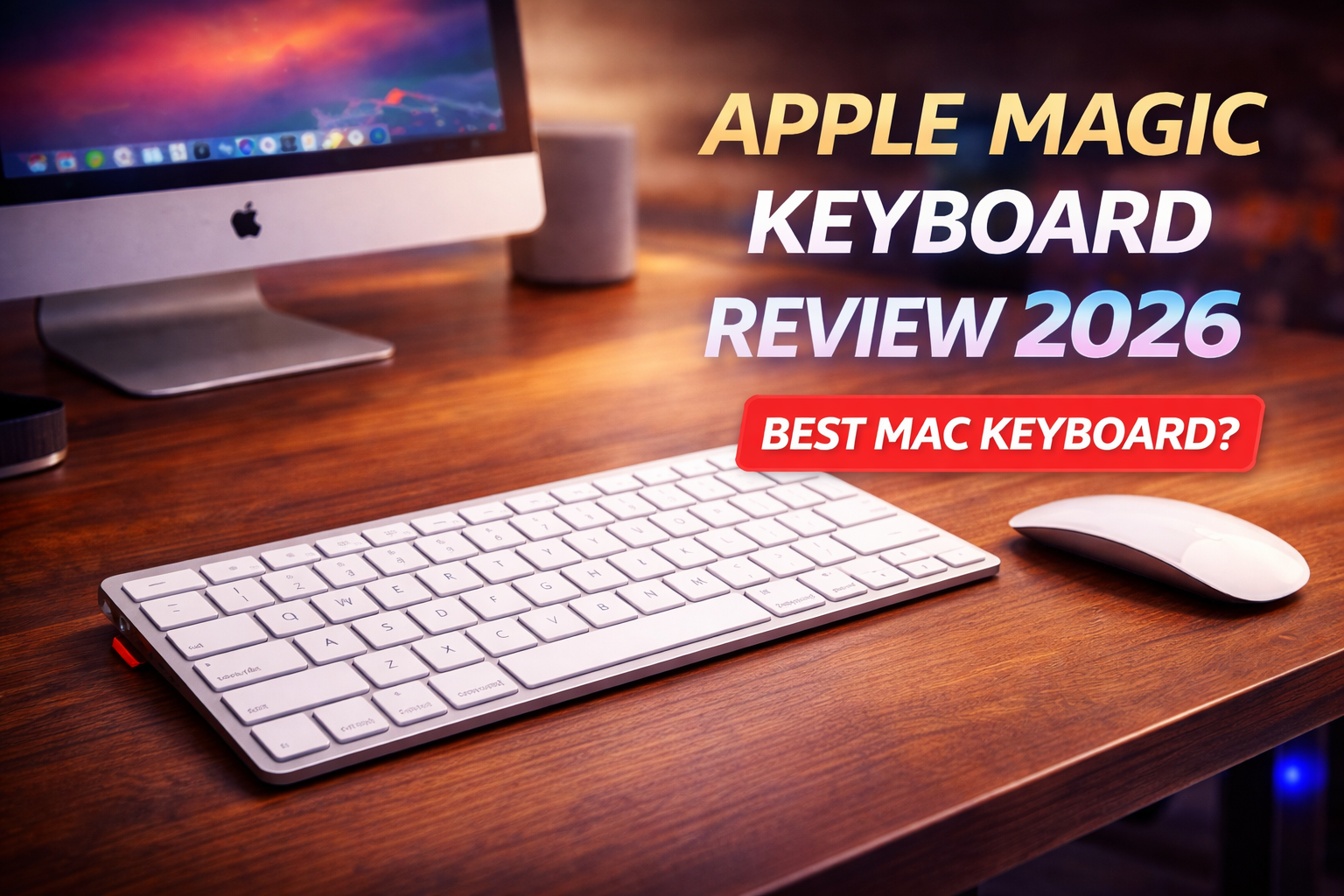
The Magic Keyboard is unmistakably Apple. The aluminum chassis feels solid and premium, while the white keys sit flush in a compact, low‑profile frame. It measures just 11.49 x 4.52 x 0.16‑0.43 inches and weighs only 0.39 pounds (approx. 177g). This makes it incredibly portable—you can easily slide it into a bag for travel.
The keys are slightly concave to help your fingertips rest naturally. The overall look is minimalist and clean, which fits any desk setup. The newest version (as of 2024–2026) charges via USB‑C, finally moving away from Lightning.
Typing Feel & Performance
Apple uses a scissor‑switch mechanism with about 0.5mm of key travel. The keys feel stable, quiet, and crisp—they don’t wobble like cheaper keyboards. There’s a light, tactile bump that lets you know you’ve pressed the key, but it’s not as pronounced as a mechanical switch.
For long typing sessions, the keyboard is comfortable, but the low travel may feel shallow if you’re used to higher‑profile boards like the Logitech MX Keys or a mechanical keyboard. However, it’s nearly silent, which is great for shared workspaces or late‑night use.
The layout mirrors the MacBook keyboard perfectly, including a full row of function keys for brightness, volume, media playback, Launchpad, and more. If you switch between a MacBook and a desktop Mac, you’ll feel right at home.
Connectivity & Battery Life
The Magic Keyboard connects via Bluetooth. Pairing is instantaneous—turn it on, hold it near your Mac, and a pop‑up asks you to connect. It works equally well with iPad and iPhone (for longer typing tasks).
The battery lasts about a month on a full charge with regular daily use. Charging is via USB‑C, and you can continue typing while it charges. The battery isn’t user‑replaceable, but it should last years before degrading noticeably.
What’s Missing (The Honest Truth)
-
No backlighting – If you often type in a dim room, you’ll miss illuminated keys. Apple has never added backlighting to the desktop Magic Keyboard, and the 2026 version continues that tradition.
-
No Touch ID – The standard model lacks the fingerprint sensor. If you want one‑touch login and Apple Pay authentication, you need the more expensive Touch ID version (~$149) and an Apple Silicon Mac.
-
Shallow key travel – Some users find the 0.5mm travel less satisfying than deeper keyboards.
-
Price – At ~$99, it’s not cheap, especially compared to solid third‑party alternatives that offer backlighting or mechanical switches.
Who Should Buy the Standard Magic Keyboard in 2026?
The standard Magic Keyboard is perfect for:
-
Apple ecosystem users who want seamless integration with Mac, iPad, and iPhone.
-
Minimalists and travelers who need an ultra‑portable, lightweight keyboard.
-
People who love the MacBook typing feel and want the same experience on a desktop.
-
Users who don’t need backlighting or Touch ID.
If you need backlighting, mechanical switches, or multi‑device quick‑switching (with dedicated buttons), look at the Logitech MX Keys S or a Keychron low‑profile mechanical keyboard.
Buyer’s Guide: What to Look for in a Wireless Mac Keyboard
1. Typing Feel (Key Travel & Mechanism)
| Mechanism | Travel | Feel | Noise | Best For |
|---|---|---|---|---|
| Scissor‑switch (Apple) | 0.5–1.0mm | Stable, shallow, quiet | Very quiet | MacBook users, quiet environments |
| Mechanical (linear/tactile) | 1.5–4.0mm | Deep, customizable, responsive | Moderate to loud | Enthusiasts, long typing sessions |
| Low‑profile mechanical | 1.2–1.5mm | Snappy, shallow, satisfying | Moderate | Gamers, typists who want feedback |
2. Backlighting
If you work in a dim room, backlighting is a must. Apple’s standard Magic Keyboard doesn’t have it; only the iPad Magic Keyboard includes backlighting. Logitech’s MX Keys S features smart backlighting that turns on when your hands approach.
3. Multi‑Device Support
The Magic Keyboard can pair with multiple devices, but you need to switch manually via the Bluetooth menu. Competitors like Logitech’s MX Keys S have dedicated “Easy‑Switch” buttons that let you jump between three devices instantly.
4. Battery Life
Most wireless keyboards last weeks or months. The Magic Keyboard’s ~30‑day battery life is excellent. Some mechanical keyboards only last a few days with RGB lighting on.
5. Price & Value
| Price Range | What You Get |
|---|---|
| Under $50 | Basic Bluetooth keyboards, often plastic, shorter lifespan |
| $50–$90 | Solid third‑party options (Satechi, some Keychron) |
| $90–$150 | Apple Magic Keyboard, Logitech MX Keys S, premium low‑profile mechanicals |
| $150+ | High‑end mechanical, custom builds, Touch ID version |
Frequently Asked Questions
Does the standard Apple Magic Keyboard work with Windows?
Yes. It connects via Bluetooth and works as a basic keyboard. However, the layout is macOS‑specific (Command key instead of Windows key), and some media keys may not map correctly. It’s not ideal for Windows users.
Is the Magic Keyboard good for gaming?
Not really. The shallow key travel and lack of anti‑ghosting make it suboptimal for fast‑paced games. Mechanical keyboards are much better for gaming.
Why doesn’t Apple add backlighting to the Magic Keyboard?
Apple has never publicly explained, but it likely comes down to battery life and keeping the keyboard ultra‑thin. Backlighting would add thickness and reduce the month‑long battery.
Can I use the Magic Keyboard with my iPad or iPhone?
Yes. The keyboard connects via Bluetooth to any iPad (iPadOS 13.4 or later) and iPhone (iOS 13.4 or later). It’s great for typing long documents or emails.
How do I clean the Magic Keyboard?
Use a soft, slightly damp, lint‑free cloth. Avoid getting moisture in the openings. Compressed air can help remove debris between keys. Do not use harsh cleaners or submerge the keyboard.
Does the Magic Keyboard come with a USB‑C cable?
Yes, the latest version includes a USB‑C to USB‑C charging cable. The older Lightning version is no longer sold by Apple.
What’s the difference between the standard Magic Keyboard and the Magic Keyboard with Touch ID?
The Touch ID version adds a fingerprint sensor that works only with Apple Silicon Macs (M1, M2, M3, etc.). It also costs about $50 more. The typing feel, layout, and build are otherwise identical.
Final Verdict
The Apple Magic Keyboard (standard) remains an excellent choice for Mac, iPad, and iPhone users who want a no‑hassle, premium wireless keyboard. Its seamless integration, long battery life, and portability are hard to beat. However, in 2026, it faces stiff competition from feature‑rich alternatives like the Logitech MX Keys S (backlighting, multi‑device buttons) and Keychron’s low‑profile mechanical keyboards (better typing feel).
| Your Priority | Best Pick |
|---|---|
| Apple ecosystem simplicity, portability | Apple Magic Keyboard (~$99) |
| Backlighting + cross‑platform | Logitech MX Keys S (~$129) |
| Mechanical feel on a budget | Keychron K3 Pro (~$89) |
| Tight budget, still decent quality | Satechi Slim X1 (~$50) |
If you’re all‑in on Apple and don’t need backlighting or Touch ID, the standard Magic Keyboard will serve you well for years. Just be aware of what you’re missing—and decide if those features are worth switching to a third‑party board.
Check Apple Magic Keyboard price on Amazon
If you’re looking for a more affordable mechanical option for gaming, check out our guide to the best budget gaming keyboards under $70 for picks that won’t break the bank.